


This continues the publishing of essays from the archive of my old newsletter. Rereading this essay, I can feel my rage from two years ago. Life is funny. I ended up screaming the lyrics to 'Rush' during Troye's Sweat Tour concert a year after writing this. That concert is still one of my favorites because I felt so unapologetically gay. This essay helped me process a lot of frustration back then.
People have no idea how dope BIPOC gay culture is. Why? Because whiteness dominates the gay mainstream. I am bored of discussing white gay men and their racism. I know for a fact, white gay men are sick of me too haha. We all have better things to do. Let's leave the white gays to their exclusive club and get back to BIPOC gay culture. First, some context.
Troye Sivan, the god of twinks himself, is one of my favorite queer singers. Recently Mr. Sivan released a new single and video promoting his upcoming third album. I love Troye's voice. I also love how he tenderly sings about queer male love. I am excited for his third album.
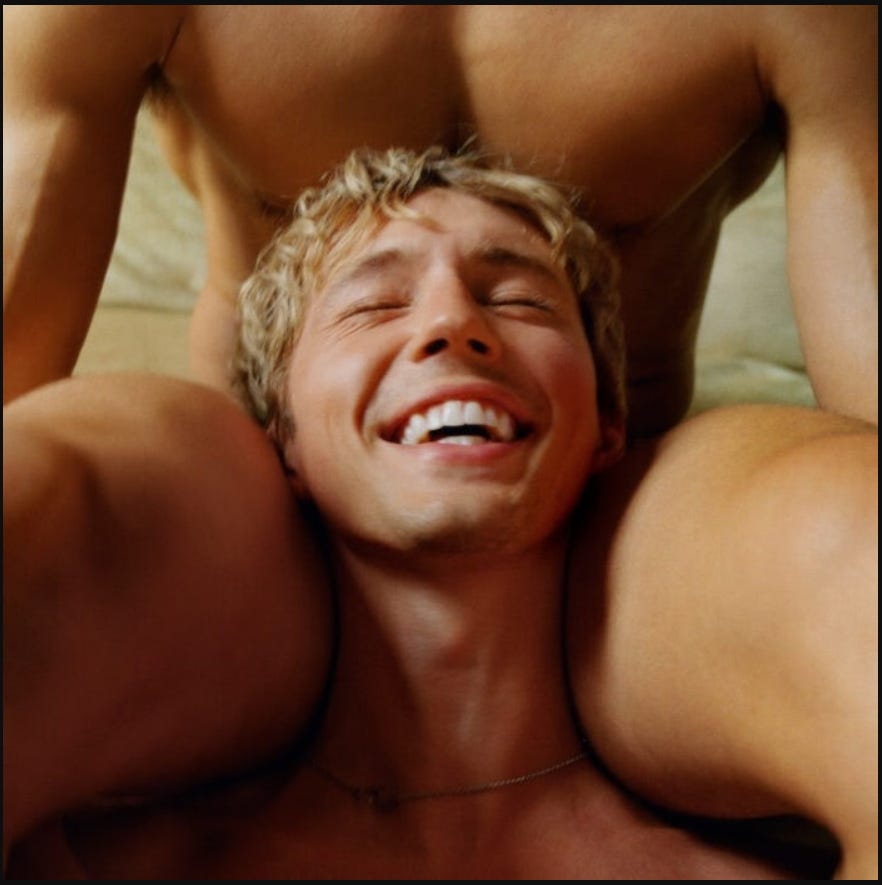
The video for his new single isn't my vibe, though. Rush is a celebration of sex, and the video attempts to capture that imagery. The video is a "sexy" beach party filled with white twinks. As the god of twinks, I expect nothing less from Troye. Of course, there were a few people of color sprinkled in to complete the aesthetic.
At first, I was disappointed by this video. I texted several friends: "Is this video hot or do I need to decolonize more?" The responses were hilarious.
"This video is trash.”
“You like this shit because you grew up around white people!”
“I can't watch this video in city hall!”
“This is hot in a conventional way.”
“Leave Troye alone, artists can't please anybody these days."
Then I asked myself, why do I care? I cared because a party full of white twinks with some POC tokens sprinkled in triggered me. It reminded me of growing up in very white Boulder, Colorado, and typically being seen as unattractive. It reminded me of gay events I was excluded from because I wasn't "conventionally hot."
“You like this shit because you grew up around white people!”
I digress. As I said earlier, I'm sick of complaining about white gay exclusivity. Lots of white gay men are racist, and lots of them are not. Life must go on. I'll talk about this shit with my therapist.
Instead of bitching about Troye's video, I am going to analyze six of my favorite videos made by queer people of color. Some of these artists are mainstream, some are indie, some are male, some are female. Let's dive in.
“Leave Troye alone, artists can't please anybody these days."
Tongue by MNEK
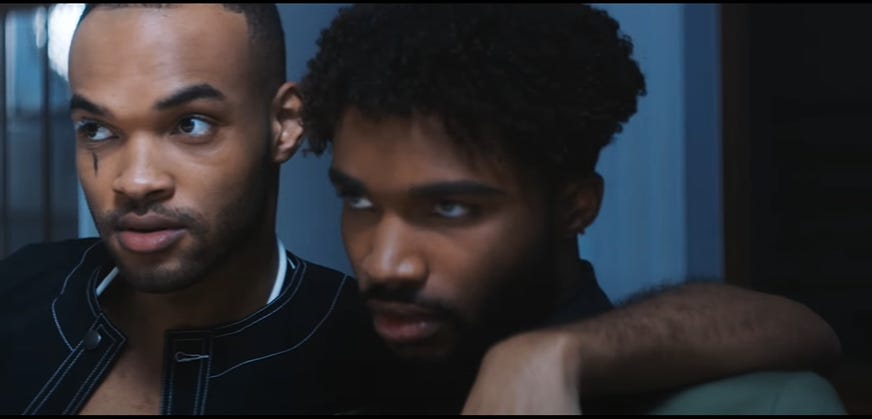
MNEK is a black queer artist from the UK. He released his debut album Language in 2018. My favorite song from this album is Tongue. On Tongue, MNEK sings about the words "I Love You" being on the tip of his tongue. The song is about his hesitation to tell a new lover how he feels. The video captures this tension beautifully.
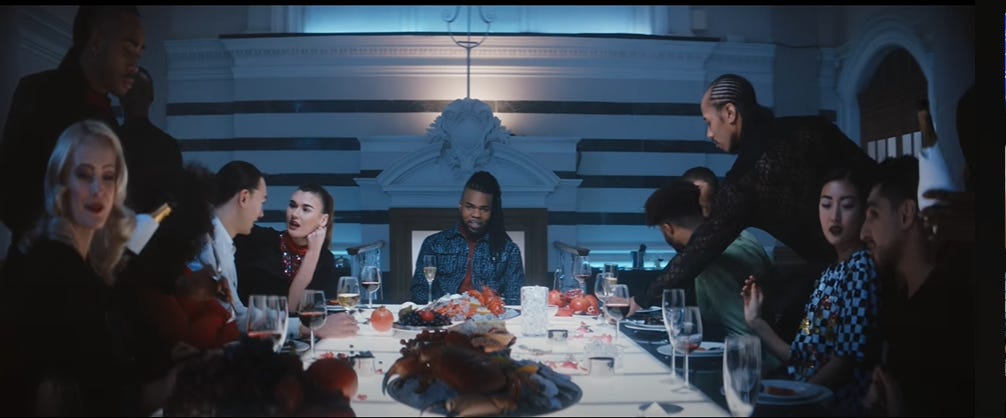
The camera starts on MNEK. He and some friends are gathered around a long dining table. It appears to be a posh event. MNEK is at the head of the table. On the other end of the table sits his love interest. They stare in a flirtatious way. The onlookers around the table notice the exchange. They whisper back and forth. They exchange curious and coy looks. Will MNEK tell this man how he feels?
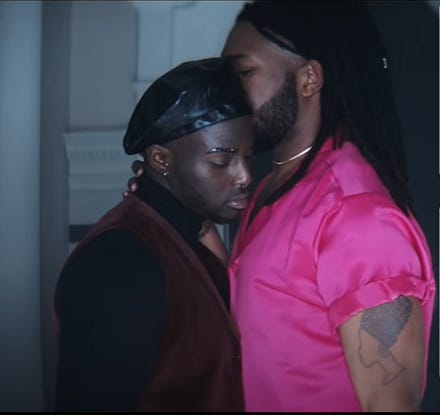
The video then cuts to MNEK in a pink satin outfit. Behind him are his dancers and backup singers. You have to watch to see how it ends.
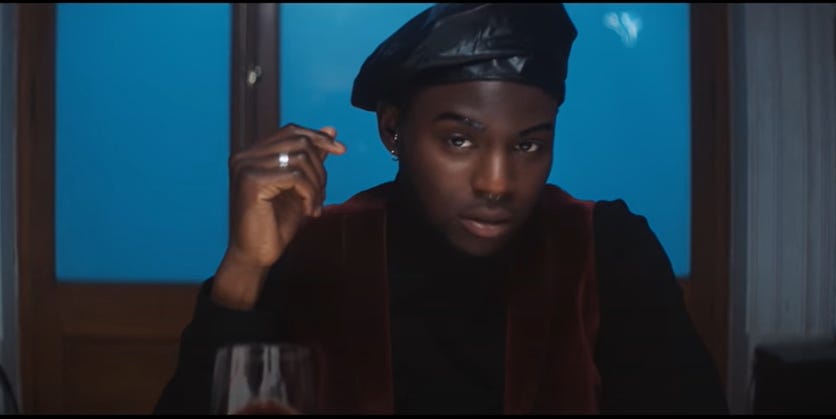
MNEK chose a black love interest for this video. It's always a coin toss, to see if a black artist will feature a black love interest. Often they don't. His party guests come in all shapes and tones. Is this required for every music video? No. However, it's nice to see imagery that reflects the variety of people in the world.
Often BIPOC artists feature white love interests in their videos. Steve Lacy often has white love interests in his videos. Tyler the Creator has been "kissing white boys for years." Kevin Abstract's partner is white, and his music videos reflect it. The Weeknd, an Ethiopian man, didn't have a black female love interest in a music video until his third album Starboy!
When both black and white queer artists feature white love interests, it sends a strong message. While one's self-esteem should not be dictated by popular media, there is no doubt it has an effect. The uproar around more diverse representation is evidence of this.
If representation doesn't matter, why are people boycotting the Little Mermaid remake? Why does the only Star Trek show with a black female lead have the lowest ratings in Star Trek history? Why are black lead shows like Watchmen and Lovecraft Country canceled after only one season? Representation definitely matters. Anyone who says otherwise, is benefitting from the status quo.
Charcoal Baby by Blood Orange
“You asked me what family is and I think of family as community. I think of the spaces where you don't have to shrink yourself. Where you don't have to pretend or to perform. You can fully show up and be vulnerable and in silence, completely empty and that's completely enough. You show up, as you are, without judgment , without ridicule. Without fear or violence, or policing, or containment. And you can be there and you're filled all the way up. We get to choose our families. We are not limited by biology. We get to make ourselves and we get to make our families.”
- Janet Mock
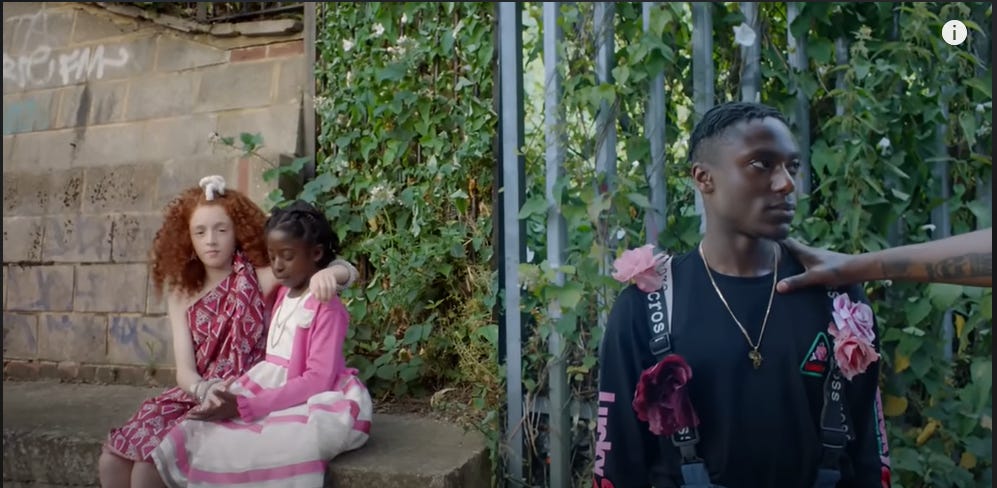
The video starts with this voiceover from trans activist Janet Mock. The words are from the track "Family," also by Blood Orange. It's fitting because this entire video is about family. We see a split screen of two days involving family. On the left we see what appears to be a biological family, on the right we see a chosen family. The left appears to be a traditional African wedding while the right looks less formal.
Dev Hynes shows us his two sides in split screen. On the left he wears traditional garb and carries an acoustic guitar. On the right he wears a do-rag and carries an electric guitar. Both gatherings have a table of shared food. Both have attendees of all ages. Both take place at The Family Restoration Centre. The sign on the venue says "where everyone feels safe."
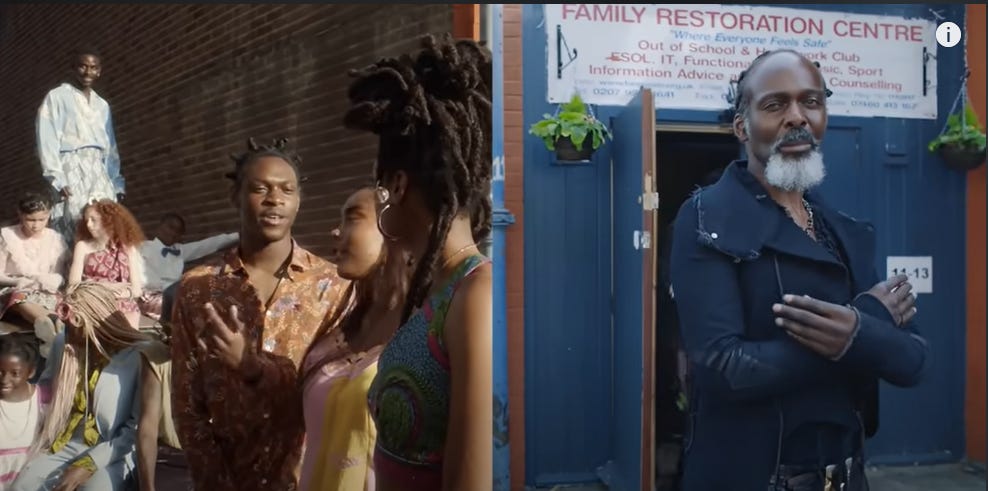
This leads us to an often overlooked aspect of sex: safety! This video isn't filled with hot chiseled men, but it shows community gathering in a safe space. It shows the joy that can flourish in a safe space, and that's why I loved it.
Tamagotchi by Omar Apollo
Tamagotchi is a single from Omar Apollo's second studio album. The video is rather tame, but the lyrics are quite spicy indeed. I find most of Omar Apollo's videos safe in regards to visuals of queer love. His aesthetic leans more to young, wild, and free. It's actually more common to see straight people making out in his videos than queer people.
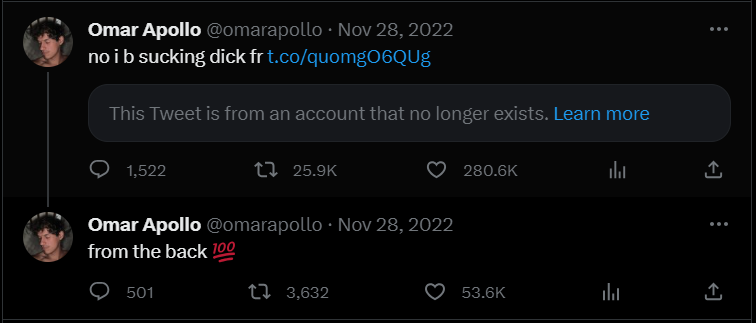
For this reason, people questioned Omar's sexuality. They even accused him of queerbaiting. Then he got on Twitter and politely told the world "I suck dick for real." Lmao. Why can't we get that radical queer sexuality in your videos?
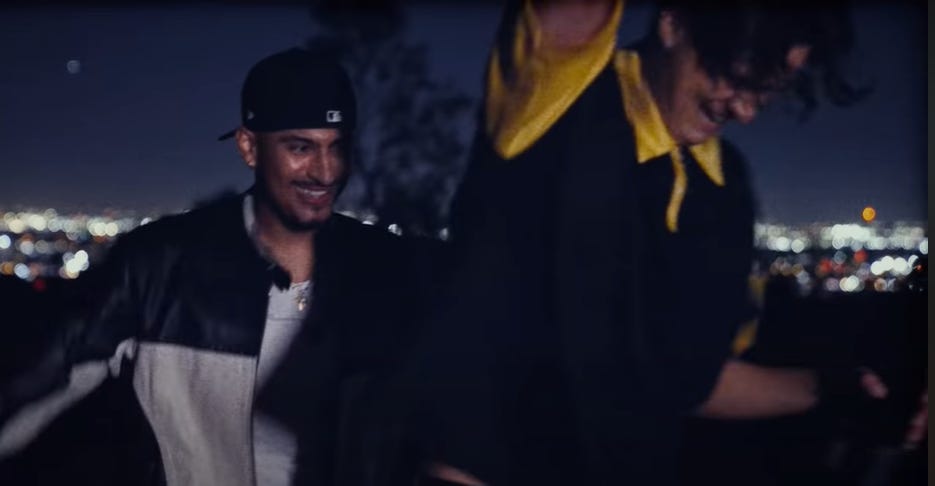
The Tamagotchi video is a series of hangout scenes. We see Omar with his band practicing. We see him smoking a doobie with a love interest. Which is a standout because his love interest is a Latino man. Rarely do we ever see romantic love between two masc-presenting Latino people in the media.
While their scenes are tame, they are also intimate. Intimacy in queer male relationships is rare on screen. There is a tendency to sexualize black and brown bodies. I also think that queer men are more comfortable with sex than intimacy. So we don't demand more nuanced imagery.
Conclusion
That's all for part one. Check back next week for more analysis of queer BIPOC music videos.